
How to Look Up Kent County Warrants
There is no single public Kent County warrant search page that lists every active warrant by name. The county uses several tools that together cover most of the ground. MiCOURT shows bench warrant entries that sit inside an open case docket. The Web Jail Viewer shows who was just booked, with the charges, the issuing court, and any holds. The Kent County Sheriff's Office confirms active warrants by phone or in person. A user with a case number, a date of birth, or even just a last name can usually narrow the answer down with two or three of these tools.
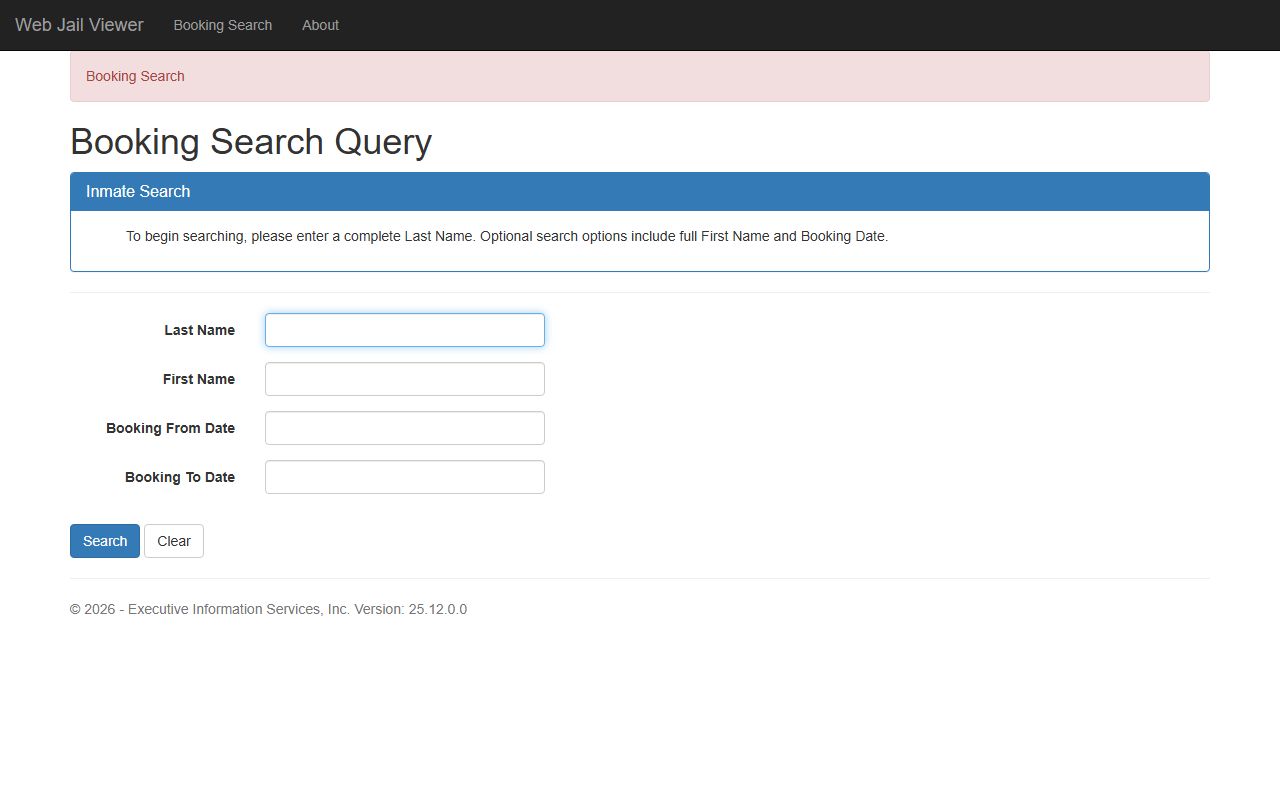
The Web Jail Viewer is the most direct picture of warrants that have already led to an arrest. A bench warrant for failure to appear will not always show as a separate item on a public docket, but the booking page will show the charge, the court case number, the arrest agency, and the bond. The image below points to the booking search the Sheriff's Office uses to publish daily booking data for Kent County.
Source: Kent County Web Jail Viewer booking search.
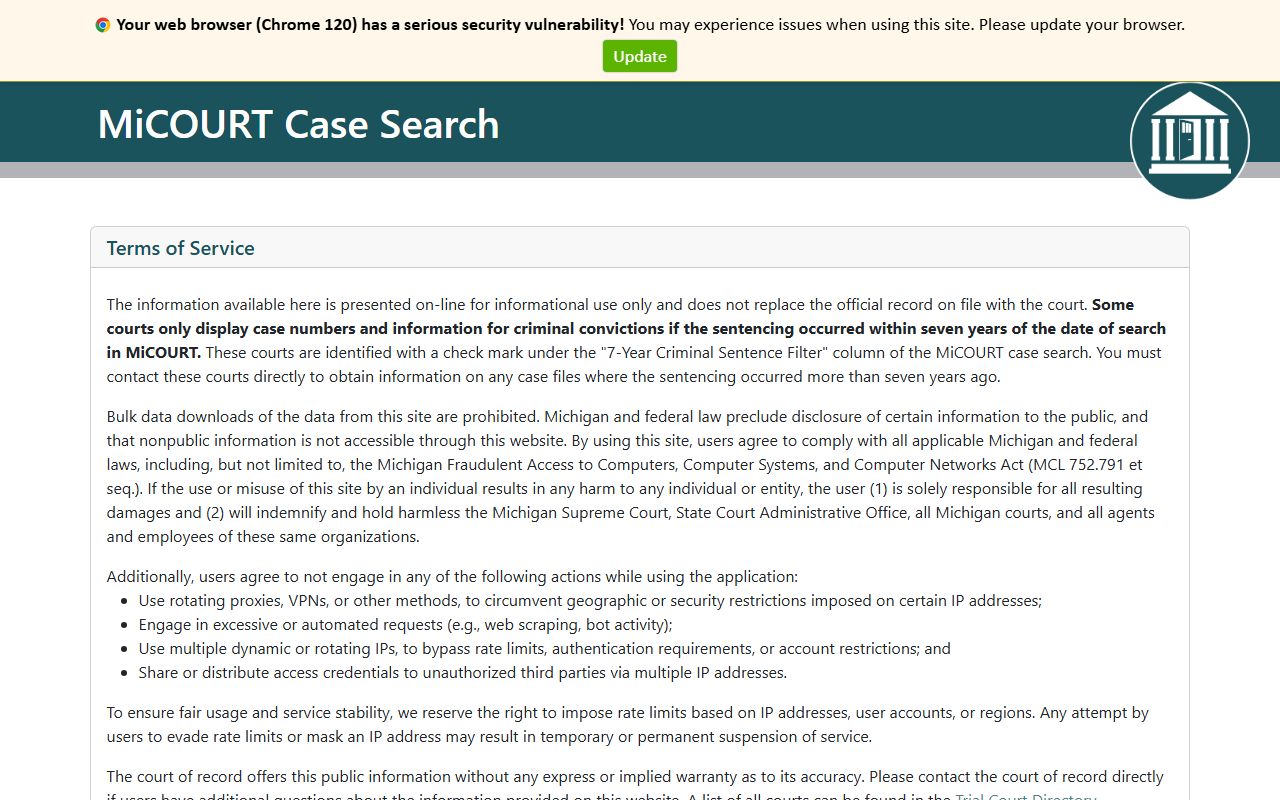
For a bench warrant in a live case, MiCOURT is the better start. The portal lists party names, hearing dates, and docket entries that may show a bench warrant or a failure to appear. The image below is the MiCOURT case search portal, the statewide gate to Kent County court files.
Source: MiCOURT Case Search.
The Kent County Sheriff's Office is the final stop. The Sheriff's records unit can confirm whether an active warrant is on file and which court signed it. The office sits at 701 Ball Avenue NE in Grand Rapids, next door to the Correctional Facility at 703 Ball Avenue NE. Phone confirmation is a smart first step before any visit. For background on related court files, the Kent County court records page covers MiCOURT in more depth.
Why Third-Party Warrant Sites Should Be Avoided
A search for a Kent County warrant will turn up a long list of for-profit warrant lookup pages. None of them is the county. None of them is the Sheriff. None of them is a Michigan court. Most of these sites copy old data or scrape booking pages weeks late. A few sell paid reports that promise warrant data they do not actually have. Acting on a third-party page can give the wrong answer at the worst time, before a court date or before a self-surrender plan.
For warrants, the only trustworthy sources are the issuing court, the Sheriff's Office, and the arresting agency. The Kent County Sheriff's Office page lists the official phone numbers and address. If a Kent County warrant search points to a paid site, stop and verify with the court or the Sheriff before sending money or filling in a form. Free public tools cover the same ground without a fee.
Types of Kent County Warrants
Michigan courts issue several kinds of warrants, and they do not all flow through the same office. Arrest warrants and bench warrants are the two a typical search will hit. Search warrants almost never show on public sites before they are served. Probation and parole warrants can come from the court or from the Michigan Department of Corrections. Civil contempt and body attachment writs show up in family and civil cases when a party fails to obey an order.
| Warrant Type | Who Issues It | Common Trigger | Where It Shows |
|---|---|---|---|
| Arrest warrant | District or Circuit Court judge or magistrate | Sworn complaint or affidavit naming probable cause | Limited public view before arrest; Web Jail Viewer after booking |
| Bench warrant | The judge in the case | Failure to appear, contempt, probation violation | MiCOURT docket entry; may show as FTA on case |
| Search warrant | District or Circuit Court judge or magistrate | Probable cause that evidence is at a place | Usually sealed before service, often after as well |
| Probation or parole | Court, MDOC, or supervising authority | Violation of supervision terms | MDOC OTIS may show parole status; arrest agency follows up |
| Civil or contempt | Family or civil judge | Failure to obey an order, support, or subpoena | Docket entry in the related case file |
Arrest warrants name a person and a charge. They give a peace officer the authority to take that person into custody. Bench warrants are signed by the judge in an open case, not in a new criminal filing. A bench warrant can be cleared in the same court that signed it. A new arrest warrant for a new charge usually has to move through arraignment first.
Active Bench Warrants and FTA
A bench warrant is the most common warrant a non-criminal user runs into. Miss a court date, miss a fine deadline, miss a probation check-in, and the judge can sign a bench warrant the same day. Once the warrant is in the law enforcement information system, a routine traffic stop can turn into an arrest. Bench warrants do not expire on their own. A warrant signed in a 63rd District Court traffic case from years ago can still trigger an arrest today.
Failure to appear, often shortened to FTA, is the most frequent reason for a bench warrant in Kent County. A failure to appear in a misdemeanor or traffic case usually adds a new charge under Michigan law, which is why ignoring a court date can leave a person with two cases instead of one. In Circuit Court, an FTA on a felony or a probation violation is a serious matter that often results in a no-bond hold. In District Court, an FTA may carry a set cash or surety bond the person can post to be released after arrest.
The fastest way to test for an open bench warrant is to look up the underlying case in MiCOURT. A bench warrant entry in the docket is a strong signal. If MiCOURT shows the case but no clear warrant line, call the clerk for the court that holds the file. The clerk staff cannot give legal advice, but they can confirm whether a bench warrant has been signed in a public case. For more on case search and docket reading, see the court records page.
Search Warrants and Sealing
Search warrants in Michigan are usually sealed before they are served. The whole point is to keep the target from learning that a search is coming. After service, the warrant and the return are often filed with the issuing court, but many remain restricted under court rule or by judicial order during an active investigation. A search warrant for a phone, a home, or a bank record is not a routine public docket item.
If a search warrant relates to a charged case, the warrant and affidavit may surface in the criminal court file once the case is filed. Defense counsel can ask for the warrant during discovery. The general public will not see most search warrants on MiCOURT or on a county website. For background on the framework that governs court records and what stays out of public view, the court records page covers Michigan FOIA and Michigan Court Rule 8.119.
Web Jail Viewer Clues to Outstanding Warrants
The Web Jail Viewer is built around bookings, not warrants. There is no field that says "active warrant" in the public form. The system still gives strong clues. A current booking with no new charge of arrest, only a court case number and a hold, usually means the person was picked up on a bench warrant or a probation warrant. A high Holds count on a single booking also points to outstanding warrants from other agencies or other courts.
The detail page is where warrant context shows up. Each charge line shows a statute, a charge status, and an arrest agency. A row that names the 17th Circuit Court or a District Court case number, paired with a "warrant" or "FTA" status, is the same kind of information a clerk would confirm by phone. Required bond and required bond amount fields show what the court already set for release. For deeper detail on how the roster works, see the Kent County inmate records page.
The viewer carries a clear disclaimer. If a person believes information shown on a booking detail is wrong, the published guidance is to contact the jail facility directly. The vendor that hosts the data does not control content from the agency. That is one more reason to call the Sheriff or the issuing court before relying on a single screen.
How to Resolve an Outstanding Warrant in Kent County
Acting on a warrant is better than waiting. A planned self-surrender, with a lawyer if the case is serious, almost always plays out better than a roadside arrest. The basic path is to confirm the warrant, find out what bond is set, get a lawyer involved if needed, and appear or surrender on a time the person can control. The steps below are written for an adult with a Kent County warrant and no immediate risk of harm.
- Confirm the warrant through the issuing court or the Kent County Sheriff's Office. Do not rely on a third-party site. A phone call to the clerk of the court that holds the underlying case is the cleanest start.
- Identify the issuing court and case number. Note whether it is a 17th Circuit Court case, a 63rd District Court case, a city district court case, or a Probate Court matter.
- Ask whether a bond is set, what the bond amount is, and what payment methods and hours apply. A bench warrant often carries a posted bond. A felony arrest warrant may carry no bond until arraignment.
- Contact a defense lawyer for any felony, probation violation, domestic violence, or extraditable case. Set-aside law and probable-cause conference timing can change the right move.
- Plan a self-surrender or a court appearance at a time of day when the Jail Processing Office and the courts are open. The Inmate Processing Office at the Correctional Facility runs 24/7, which gives some flexibility.
- Bring photo ID, the case number, and any paperwork from the court. If a bond will be posted at the time of surrender, bring the payment in an accepted form.
- After resolution, confirm that the warrant recall has reached law enforcement databases and, if relevant, the Michigan Secretary of State driver record. A signed order in the file is not the same as a cleared LEIN entry.
The Kent County Prosecuting Attorney does not give legal advice to defendants. The prosecutor does not "drop charges" on request. For a felony or a probation matter, an attorney filing in the case is the proper channel to ask for a bond change, a quash motion, or a new hearing date.
Bond and Self-Surrender Options
Once a person is in custody on a Kent County warrant, release usually depends on posting bond. The Inmate Processing Office at the Kent County Correctional Facility runs 24 hours a day, 365 days a year. The office handles the financial documentation, the bond paperwork, and the court records side of release. Bond cannot be posted until the court has set it, which can mean waiting for arraignment in some felony cases.
Kent County Sheriff's Office
701 Ball Avenue NE
Grand Rapids, MI 49503
Records and warrant verification
Kent County Correctional Facility
703 Ball Avenue NE
Grand Rapids, MI 49503
Inmate Processing Office, 24/7, 365 days
Bond posting and release
TouchPay Bond Payments
Phone: 866-232-1899
Online TouchPay portal
Card and electronic payments
Vendor fees apply
Accepted bond payment methods at the Jail Processing Office include cash, credit card with a vendor fee in the 8 to 20 percent range, cashier's check, and money order made payable to the Kent County Sheriff's Office. The TouchPay portal and the TouchPay phone line at 866-232-1899 give a remote option for people who cannot come to the jail in person. Bring photo ID, the booking number if known, and the exact bond amount in an accepted form.
Bond type matters as much as bond amount. A 10 percent bond lets the poster put up a fraction of the full bond. On a successful court appearance, 90 percent of the posted amount is refundable. Failure to appear forfeits 100 percent of the posted amount and triggers a new bench warrant. A cash surety bond requires the full amount up front. A personal recognizance bond requires no money, only a promise to appear and to obey conditions. The court sets the type based on the charge, the flight risk, and any criminal history.
Note: Bond fees paid by credit card carry vendor processing fees of roughly 8 to 20 percent and are not refundable from the vendor.
What the Jail Detail Page Shows About a Warrant
The Web Jail Viewer detail page is the public version of a booking sheet. For warrant-related research, the most useful fields are the ones that tie a charge to a court case. The list below tracks the fields that show up on a public detail page after a search on the booking endpoint at the Kent County Sheriff's Office.
| Field | What It Shows |
|---|---|
| Violation / Statute | The Michigan statute or local ordinance for the charge, with offense text. |
| Arrest Agency | The agency that made the arrest. Sheriff, city police, state police, or other. |
| Arrest Date | The date the person was taken into custody. |
| District Court Case # | The district court case tied to the charge, when one exists. |
| Circuit Court Case # | The 17th Circuit Court case number, used for felonies after the bindover. |
| Charge Status | Open, pretrial, disposed, or closed. A status with "warrant" or "FTA" wording is a clear flag. |
| Bond Type | Cash, surety, 10 percent, or personal recognizance. |
| Required Bond Amount | The amount that must be posted to obtain release. |
| Holds Count | Number of holds. A high count points to other warrants or other agencies. |
| End of Sentence Date | Useful if the booking is on a violation of probation or parole. |
None of these fields by itself confirms an active outstanding warrant on someone not in custody. They confirm what a court has already done in cases that led to an arrest. For a person who has never been arrested on the warrant in question, the safer path is still a call to the issuing court. For more on what the Sheriff publishes, the inmate records page covers the rest of the roster.